Blog
Old School High Tops vs. Modern Designs: What’s the Difference?

Old School High Tops vs. Modern Designs: What’s the Difference?
In the sneaker world, there is a constant battle between heritage and innovation. On one side, you have the purists who swear by old school high tops—the original silhouettes that defined the 70s and 80s. On the other side, you have fans of modern technology who prioritize lightweight materials and advanced cushioning.
But if you are shopping for a new pair of kicks today, which one should you choose? Are vintage high top trainers just about looks, or do they hold up against modern engineering? Let’s break down the key differences to help you decide.
1. The Aesthetic: Raw vs. Refined
The most immediate difference is visual.
Old School High Tops:
The charm of old school high tops lies in their simplicity and “rawness.” They often feature:
- Stitched Soles: The upper is stitched directly to the sole (often cupsole or vulcanized construction), making them durable but slightly heavier.
- Minimal Branding: Clean lines, simple logos, and block colors.
- Unfinished Edges: Some vintage styles feature exposed foam on the tongue, a detail that screams “retro.”
Modern Designs:
Modern high tops often look more “engineered.” You’ll see:
- Fused Materials: Instead of stitching, panels are often heat-fused to reduce weight.
- Sleek Silhouettes: They are often slimmer and hug the foot more closely (like a sock-fit).
2. Comfort and Technology: The Biggest Divide
This is where the debate heats up.
The Vintage Feel:
Original vintage high top trainers were built for court stability, not necessarily cloud-like comfort. They typically have flat rubber soles with minimal arch support. For many, this “ground feel” is desirable—it feels stable and grounded. However, if you are walking all day, they might feel a bit stiff initially until broken in.
The Modern Upgrade:
Modern sneakers utilize EVA foam, air units, or proprietary boost technologies in the midsole. They are designed to absorb shock and provide energy return.
Pro Tip: If you love the look of old school high tops but need modern comfort, look for “Retro-Tech” models. These are shoes that look vintage on the outside but hide modern insoles on the inside. (See our guide on Retro High Top Shoes for top picks in this category).
3. Durability and Materials
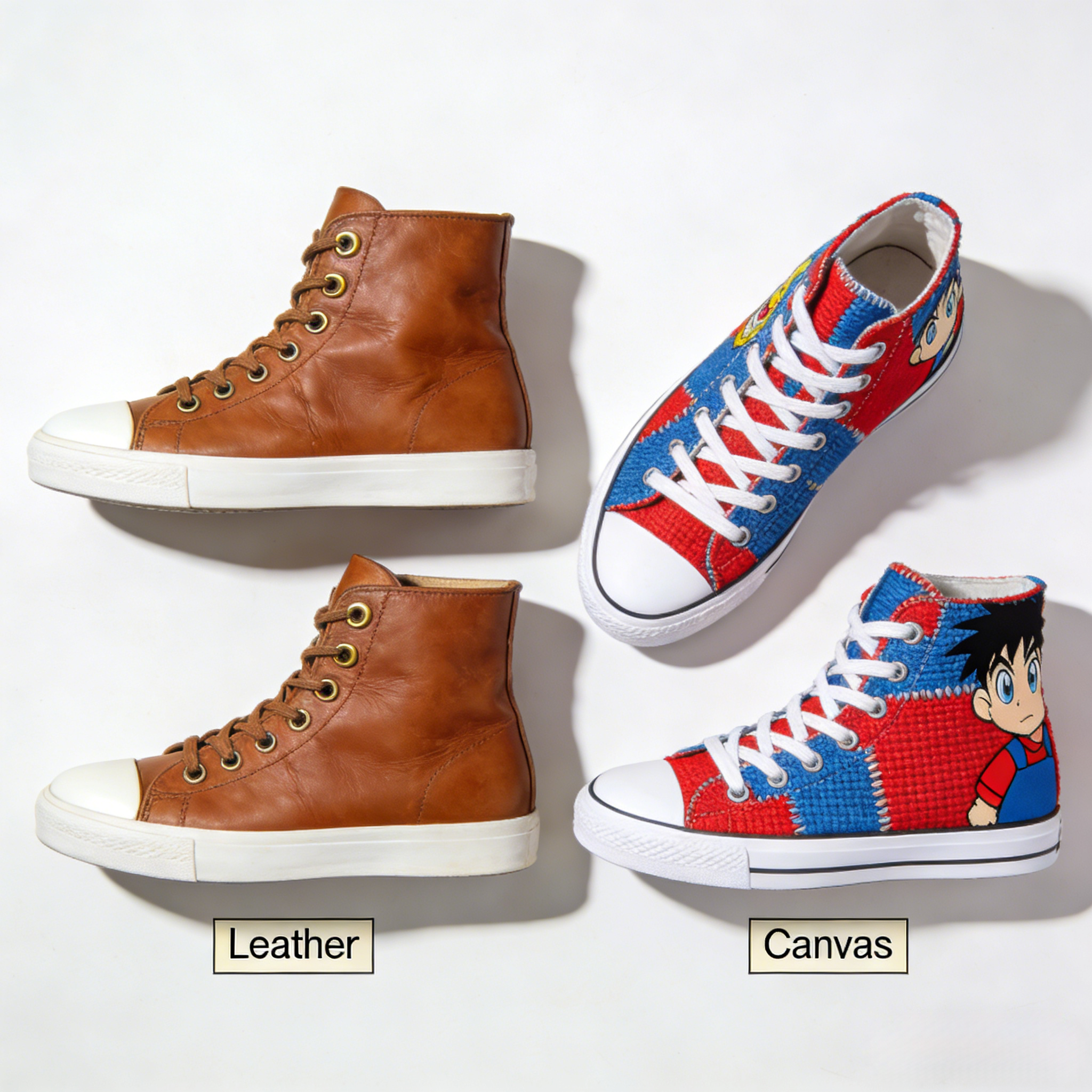
Old School High Tops are often referred to as “tanks.” They were made from thick, full-grain leathers or heavy-duty canvas designed to survive concrete courts. The heavy rubber outsoles take a long time to wear down.
Modern designs often use synthetic meshes or knit materials. While these are incredibly breathable and light, they can be more prone to tearing or snagging compared to the thick hide of a vintage shoe.

4. The Verdict: Which is Right for You?
Choose Old School High Tops if:
- You prioritize style and the timeless “cool” factor.
- You want a shoe that ages beautifully (leather creases look better on retro shoes).
- You prefer a stable, flat sole for lifting weights or casual walking.
Choose Modern Designs if:
- You are buying them for performance sports (running, high-intensity basketball).
- You have specific foot issues that require maximum arch support and cushioning.
- You prefer a lightweight shoe that feels like you are wearing nothing.
Conclusion
The gap between “Old School” and “Modern” is narrowing. Today, the best vintage high top trainers are those that respect the past while acknowledging the present. Whether you choose the rugged durability of a classic or the technical prowess of a modern hybrid, the high top silhouette remains a staple.
At our store, we specialize in high tops that offer the best of both worlds—classic aesthetics with upgraded comfort.
Want to learn more about the history behind these styles? Check out our main article: The Ultimate Guide to Retro High Top Shoes